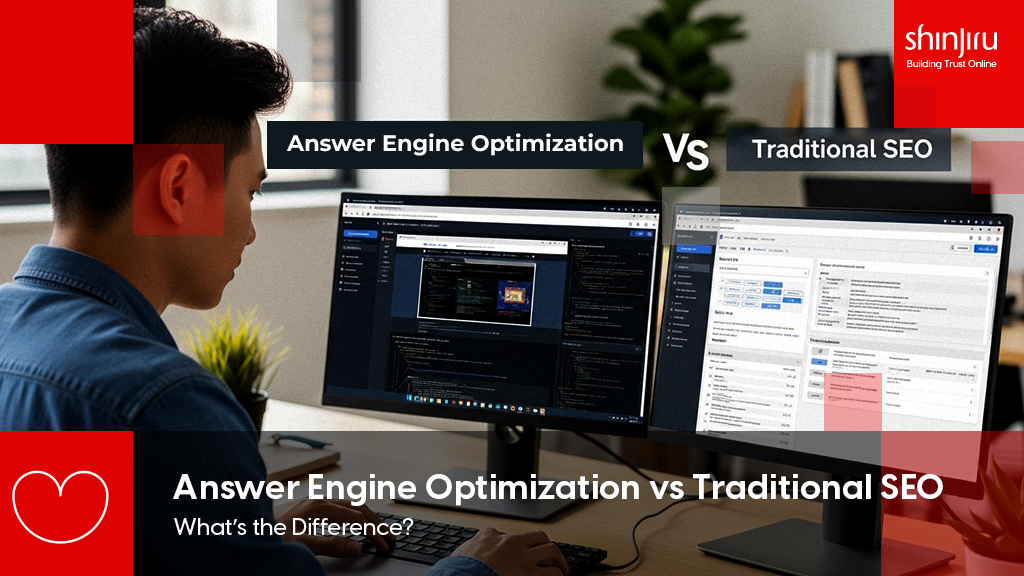
Answer Engine Optimization vs Traditional SEO: What’s the Difference?
In the world of digital marketing, staying ahead of the curve is key. One of the biggest shifts we’re seeing today is the move from traditional SEO to something called Answer Engine Optimization (AEO). While traditional SEO has been around for decades, AEO is a newer approach that focuses on how people search for answers online, especially through voice assistants and smart devices.
Shinjiru, a leading provider of SEO services in Malaysia, are helping businesses adapt to these changes. If you want your content to appear in direct answers on Google, Alexa, or Siri, you need to understand the difference between AEO and traditional SEO.
Let’s break it all down in a simple way.
What Is Answer Engine Optimization (AEO)?
Answer Engine Optimization is the process of making your content ready that directly answers user questions. The goal is to get your content featured in voice search results, featured snippets on Google, and direct answers on smart devices. AEO is not about ranking on page 1, it’s about being the top answer.
Key Difference Between AEO vs Traditional SEO
Answer engine optimization (AEO) represents a major transformation in search technology, going beyond the keyword-focused methods of traditional SEO. The differences between these two strategies highlight how search platforms have adapted to serve the needs of today’s users.
Query Intent vs Keyword Targeting
Traditional SEO is built around ranking web pages for specific keywords. It often emphasizes high-volume search terms to increase visibility on search engine results pages (SERPs). This strategy, while effective in boosting clicks, can sometimes miss Answer Engine Optimization is more focused on the user’s intent behind the query.
Rather than targeting isolated keywords, AEO anticipates the context, follow-up questions, and likely outcomes of a search. This makes it ideal for voice search and AI-powered engines that aim to deliver full answers rather than just point users to a website.the deeper search intent especially queries that signal a readiness to purchase or take action.
Direct Answers vs Link Listings
Perhaps the most noticeable difference lies in how results are delivered. Traditional SEO works to improve a site’s ranking within the long list of search results. It’s about climbing the ladder on SERPs to gain visibility and traffic.
Answer Engine Optimization, on the other hand, skips the ladder. It focuses on getting your content selected as the immediate answer, shown in a featured snippet, spoken by a voice assistant, or presented as a zero-click result. Users don’t have to visit your site; they get the answer directly, which is increasingly what modern users prefer.
AI-Driven Responses vs Manual Indexing
The technology behind AEO is significantly more advanced. AI powered search engines now use natural language processing (NLP) to understand questions, interpret meaning, and deliver rich, conversational responses. These systems go beyond simple keyword matching, processing voice, text, and even visual inputs to provide a seamless user experience.
Traditional SEO, by comparison, still largely depends on manual indexing and keyword relevance. It looks at text on a webpage and matches it to typed queries. While effective, it’s less dynamic and less responsive to evolving search behaviours.
Comparing Two Approaches in Practice
- Traditional SEO focuses on improving visibility through higher SERP rankings, mainly using keywords and backlinks.
- Answer Engine Optimization is about delivering precise, fast answers to natural language queries, particularly through AI-powered interfaces like voice assistants or answer boxes.
- Content format is another area of contrast, traditional SEO supports in-depth content, whereas AEO favors concise, structured information such as FAQs, definitions, and lists.
- Processing style is also different. Traditional SEO relies on matching keywords, while AEO thrives on understanding content, intent, and conversational phrasing.
Why Both Matter Today
As search engines evolve, the lines between SEO and AEO are beginning to blur but they remain distinct in purpose. Traditional SEO helps you win visibility, especially for competitive or long-tail searches. Meanwhile, Answer Engine Optimization helps you win trust and authority by answering user questions instantly.
Strategies for AEO Without Affecting SEO
To implement AEO and SEO effectively, businesses must gain a clear understanding of their audience, structure their data efficiently, and consistently improve their content. Key strategies involve performing keyword research, applying structured data markup, and tailoring content for voice search.
1. Keyword Research for Queries
Effective AEO starts with solid keyword research. Use tools like Google Keyword Planner and Search Console to discover relevant queries and track performance.
Look for modifiers like “what is” or “how to” to better understand user intent. Incorporate generative AI to create tailored responses that match specific user questions.
2. Write High-Quality Content
Create clear, informative content that directly answers user queries. Ensure it’s well-researched, uses relevant keywords naturally, and is easy to read.
Use bullet points, headers, and short paragraphs to improve readability and increase chances of being featured in answer boxes or voice search.
3. Utilize Structured Data Markup
Structured data like schema markup helps AI and search engines better interpret your content.
Use types like FAQ, How-to, and Q&A from Schema.org to improve visibility in answer boxes and featured snippets.
4. Optimize Content for Voice Search
Voice search requires a conversational tone and natural sentence structure.
Focus on full-sentence queries and localised keywords like “near me” to boost local SEO. Getting into featured snippets also increases your visibility and credibility in voice search results.
5. Create Comprehensive FAQ Pages
Well-structured FAQ pages answer common questions clearly and briefly.
Using structured data boosts their visibility in search. Pages like FAQs and About Us build trust and are favoured by answer engines.
6. Build Trust and Authority
AEO helps position your brand as a reliable source of information.
Trust and authority not only improve online credibility but also drive more organic traffic and visibility.
AEO Performance Monitoring and Optimization
To keep your AEO strategies effective, it’s essential to monitor key performance metrics and update your content regularly.
Monitoring Key Metrics
Track metrics like organic traffic, click-through rates, and engagement levels to measure AEO success and spot areas for improvement.
Use analytics tools to adapt to evolving user queries and algorithm updates, ensuring your content stays relevant.
Regular Content Updates
Regularly updating content helps match changing user behavior and preferences. Refining content based on performance and user feedback improves engagement and ensures your AEO remains effective.
Advantages of Answer Engine Optimization for Businesses
AEO is vital in modern digital marketing, supporting the demand for fast, accurate answers and improving visibility through featured snippets and voice search.
Engaging Users More Effectively
AEO boosts satisfaction by delivering quick, relevant answers.
This increases time spent on-site, lowers bounce rates, and can enhance conversions by guiding users through decision-making more effectively.
Driving Organic Traffic
Appearing in answer boxes and featured snippets increases visibility and attracts more visitors. With 58% of users relying on voice search for local businesses, voice-optimized content also improves local SEO.
Well-crafted FAQ pages that address common questions are more likely to appear in search results and attract clicks. Over time, consistent and helpful AEO content positions your brand as a trusted authority and drives sustainable traffic growth.
Conclusion
The way people search for information is changing fast. With more voice searches, smart assistants, and instant answers, Answer Engine Optimization is no longer just a trend but it’s a must-have.
If you want your content to appear as the go-to answer online, it’s time to blend AEO with your traditional SEO strategy.
Businesses that move early will have a big advantage. That’s why working with experts like Shinjiru, a top SEO Malaysia provider, can make a real difference. Their team understands how to optimize for both search engines and answer engines helping your content reach more people in more ways.
Find more about: Here’s Why SEO is the Answer If You Want More Customers!